
Last month, one of our customers called us from Delhi really frustrated. His bike had reached him with a cracked mirror, a dead battery, and a strong smell of petrol that had leaked inside the truck. The bike itself wasn’t badly damaged, but the whole experience left a bad taste. When we asked him how he had prepared the bike before handing it over, there was a long pause. “I just gave it as it was,” he said.
That one conversation is the reason we’re writing this.
Most people spend days planning their home relocation packing clothes, labelling boxes, arranging furniture but when it comes to the bike, they hand it over without a second thought. And then they’re surprised when something goes wrong in transit.
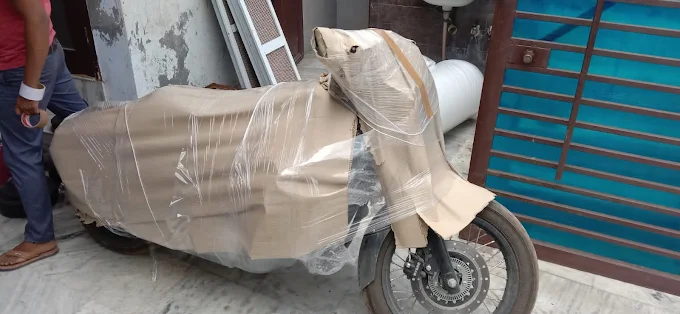
Preparing your bike before transportation is not complicated. It does not take more than a few hours. But it makes a massive difference to what condition your bike arrives in.
The Fuel Issue – This One Catches Everyone Off Guard
If there is one thing you should take seriously, it is the fuel in your tank.
Petrol is flammable, and transport trucks carry multiple items together sometimes furniture, sometimes other vehicles. A full or even half-full fuel tank is a genuine safety concern, especially over a bumpy highway stretch where the bike might tilt or shift slightly.
More practically, fuel can seep through the fuel cock into the engine or onto other goods if the bike is not kept perfectly upright. We have seen this happen. It’s unpleasant and it does cause damage.
So before your bike goes into the truck, run it down to almost empty. Just enough petrol to start the engine and ride it onto the loading area is fine. You’ll fill it up at a petrol pump after it arrives that’s a five-minute job. On older bikes that have a manual fuel switch near the tank, turn it to the OFF position before handover. This small thing prevents a lot of problems.
The Battery Will Die If You’re Not Careful
This surprises people because it sounds unlikely how can a parked bike lose its battery? But it happens more often than you’d think.
Modern bikes, especially fuel-injected ones, have small electrical draws even when turned off. The ECU, the alarm system, the clock these all pull tiny amounts of current. Over three or four days in a truck, that adds up and the battery drains flat.
If you’re moving somewhere far say Panchkula to anywhere your bike will easily be in transit for four to five days. In that case, just disconnect the battery before handing it over. It’s a two-minute job with a small spanner. Remove the negative terminal first, then the positive, and wrap them so they don’t accidentally touch anything metal.
When the bike arrives, reconnect it and you’ll be fine. No jump-start needed, no trip to the mechanic on day one.
Protect the Parts That Always Get Damaged
There are three things that almost always take a hit during bike transportation mirrors, levers, and indicators. They stick out, they’re fragile, and they’re the first to catch on something during loading, unloading, or when the truck goes over a bad road.
If your mirrors fold in, fold them. If they don’t, wrap them with bubble wrap or even thick cloth and tape it down. Do the same for the brake lever and clutch lever. It takes ten minutes and costs nothing if you’re using old newspaper or cloth from home.
Take off anything that’s loosely attached a phone mount, a USB charger, an aftermarket LED strip, a windshield if it comes off easily. Keep these with you during the move. Small accessories that aren’t part of the original bike are easy to lose and hard to claim compensation for.
Before You Hand Over the Keys – Do This
Take photos. Properly, not just one blurry shot.
Walk around your bike and photograph it from every angle. Get close-ups of the tank, the fairings, both mirrors, the indicators, and anywhere that already has a scratch or dent. Make sure the photos have a timestamp your phone will usually do this automatically.
This is not about being paranoid. It is just basic common sense. If something gets damaged in transit and you want to raise a complaint, these photos are the only thing that proves the condition your bike was in before the move. Without them, it becomes your word against the transporter’s.
Also, when you hand the bike over, ask for a condition report. A good moving company will already have this as part of their process they note down the current state of the bike, any existing damage, and both parties sign it. If the company you’ve hired doesn’t do this, ask for it anyway. Write it down yourself if you have to, and have someone from their team sign it.
Ask About Insurance Before You Assume It’s Covered
Transit insurance for vehicles is something many packers and movers offer, but the details vary a lot. Some include it in the base price, others charge extra. Some policies cover scratches and dents, others only cover total loss.
Before you sign anything, ask directly is my bike covered during transit, what is the declared value, and what is the process if I need to make a claim? Get the answer in writing if possible.
This is not a formality. If something does go wrong, having clear insurance coverage means the difference between getting compensation and getting ignored.
When It Arrives – Don’t Just Sign and Walk Away
When your bike is delivered, the instinct is to be relieved and quickly get it inside. Resist that.
Before you sign the delivery receipt, spend five minutes checking the bike properly. Look for any new scratches or cracks. Check the mirrors and levers. Try starting it. If something looks wrong if there’s damage that wasn’t there when you handed it over note it down on the receipt right then, before you sign.
Once you sign a clean receipt, the case is essentially closed. No moving company will entertain a complaint about damage that was not noted at delivery. So take those five minutes seriously.
A Practical Word on Transit Times
People often ask how long it will take for the bike to arrive. The honest answer depends on the route, the company, and how many stops the truck makes along the way.
As a general guide from Panchkula Delhi usually takes a day, Mumbai around three to four days, and cities like Bangalore or Hyderabad can take five to six days. Always confirm the estimated delivery window with your moving company before the truck leaves. And build in a day or two of buffer before you actually need the bike, just in case there are delays on the road.
Moving is already stressful enough without worrying about whether your bike will make it in one piece. A little preparation draining the fuel, disconnecting the battery, protecting the fragile bits, taking photos, and reading your insurance paperwork is genuinely all it takes.
If you’re relocating from Panchkula and want to make sure your bike is handled properly, our team at Om Shakti Packers and Movers has been doing this for years. Call us at 08054327740 and we’ll sort it out.